Fabitha Font: Elevate Small Business Branding
As a small business owner, every visual touchpoint matters. From the logo on your website header to the sticker sealing your shipping box, typography communicates your brand’s personality before a customer even reads a single word of copy. Finding a typeface that balances elegance with approachability is often the key to looking established and trustworthy without losing that personal, handmade charm. This is where Fabitha shines as a practical design asset for entrepreneurs who need their branding to feel both luxurious and authentic.
Defining the Fabitha Aesthetic for Modern Brands
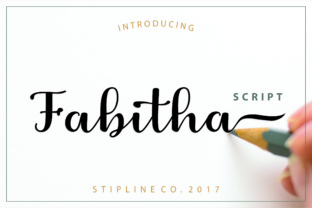
Fabitha is a modern, handwritten calligraphy script that steps away from the overly ornate or difficult-to-read styles of traditional formal scripts. Instead, it offers a fresh and classy aesthetic that feels intentional rather than messy. For a boutique owner or independent creator, this distinction is vital. You want a font that suggests high quality and attention to detail, but you also need it to remain accessible to your target audience.
The flow of this script font mimics natural hand lettering, giving it an organic warmth that standard digital fonts often lack. It carries enough weight to stand out as a headline or logo mark, yet retains a delicate refinement suitable for beauty products, wedding stationery, or artisanal food packaging. When browsing through Script Amp or other font marketplaces, Fabitha stands out because it bridges the gap between casual handwriting and premium display typography. It does not scream for attention; instead, it invites the viewer in with a sense of curated sophistication.
Practical Applications Across Business Touchpoints
A beautiful font is only useful if it performs well across the various materials your business requires daily. Consistency builds recognition, and Fabitha is versatile enough to maintain that consistency across both digital and physical mediums. Here is how this typeface translates to real-world business scenarios:
- Product Packaging and Labels: For handmade candle makers or skincare formulators, label space is limited. Fabitha works exceptionally well for product names or short taglines like "Hand-Poured" or "Organic Blend." Its distinct character shapes remain legible even at smaller sizes, ensuring your packaging looks professional on a shelf or in a flat-lay photo.
- Social Media Graphics: On platforms like Instagram and Pinterest, text needs to be readable on mobile screens within seconds. Use Fabitha for quote overlays, announcement banners, or story highlights. The script adds a human element to digital content, stopping the scroll more effectively than generic sans serif fonts.
- Customer Experience Materials: Unboxing is a critical marketing moment. Printing thank-you cards, care instructions, or discount codes in Fabitha reinforces the premium feel of the purchase. It signals to the customer that you care about the details, transforming a simple transaction into a memorable brand experience.
- Signage and Menus: For café owners or salon operators, wall menus and directional signage benefit from this font’s clarity. It provides the decorative flair expected in hospitality and wellness spaces without sacrificing the functionality required for customers to quickly read prices or services.
Strategic Font Pairing for Professional Layouts
While Fabitha is a stunning display font, it should rarely be used alone. To create a cohesive brand identity, you must pair it with supporting typefaces that handle the heavy lifting of body copy. As a general rule for small business design, let Fabitha serve as the accent or headline while relying on cleaner fonts for information density.
For a modern, minimalist look, pair Fabitha with a geometric sans serif font. The contrast between the fluid curves of the script and the structured lines of a sans serif creates a balanced, contemporary vibe perfect for tech-adjacent creative businesses or modern apparel brands. Alternatively, pairing Fabitha with a classic serif font evokes tradition and heritage. This combination is ideal for bakeries, florists, or vintage-inspired boutiques where trust and history are part of the value proposition.
When designing business cards or website hero sections, use Fabitha for the business name or primary value proposition, and reserve your secondary font for contact details, URLs, and descriptive paragraphs. This hierarchy guides the customer’s eye naturally and ensures that the most important information is absorbed first.
Readability and Functional Design Considerations
The biggest risk when using any handwritten font in a commercial setting is sacrificing legibility for style. Before committing Fabitha to your entire brand suite, test it rigorously. Print your labels at actual size to ensure the swashes do not bleed into other elements or become muddy when printed on textured paper. View your social media templates on a phone screen, not just a desktop monitor, to verify that the text remains crisp against busy backgrounds.
Avoid using Fabitha in all-caps. Script fonts are designed with specific connections between lowercase letters; forcing capitalization breaks these connections and destroys the natural rhythm of the typeface. If you need emphasis, increase the point size or use bold weights of your supporting sans serif font instead. Additionally, be mindful of spacing. Handwritten fonts often require adjusted kerning or tracking to look their best, especially in logo design. Taking the time to refine these micro-details is what separates amateur designs from professional brand identities.
Licensing and Commercial Usage Rights
One aspect of typography that many new entrepreneurs overlook is licensing. Using a font for personal projects is vastly different from using it for profit. Before incorporating Fabitha into your business assets, review the specific license agreement provided by the foundry or marketplace.
Determine whether you need a standard commercial license or an extended license. A standard license typically covers branding, packaging, and social media for a single business. However, if you plan to use the font on merchandise intended for resale (like t-shirts or mugs), in editable client templates, or in digital products, you will likely require an upgraded license. Respecting these terms protects your business from legal issues and supports the type designers who create these valuable tools. Always keep a record of your license receipt in your business files as proof of compliance.
Building Trust Through Visual Consistency
Ultimately, investing in a premium font like Fabitha is an investment in your brand’s perceived value. Customers make split-second judgments about quality based on visual presentation. A consistent, well-executed typographic system tells them that your business is legitimate, thoughtful, and worth their money.
By integrating Fabitha strategically into your logos, packaging, and digital content, you create a recognizable visual language that sets you apart from competitors using generic free fonts. It allows you to convey luxury and warmth simultaneously, helping you attract clients who appreciate craftsmanship and quality. Whether you are launching a new venture or refreshing an existing brand, choosing the right typeface is one of the most impactful decisions you can make for your long-term success.